
Get Your Prepaid eSIM Instantly Without Any Contracts
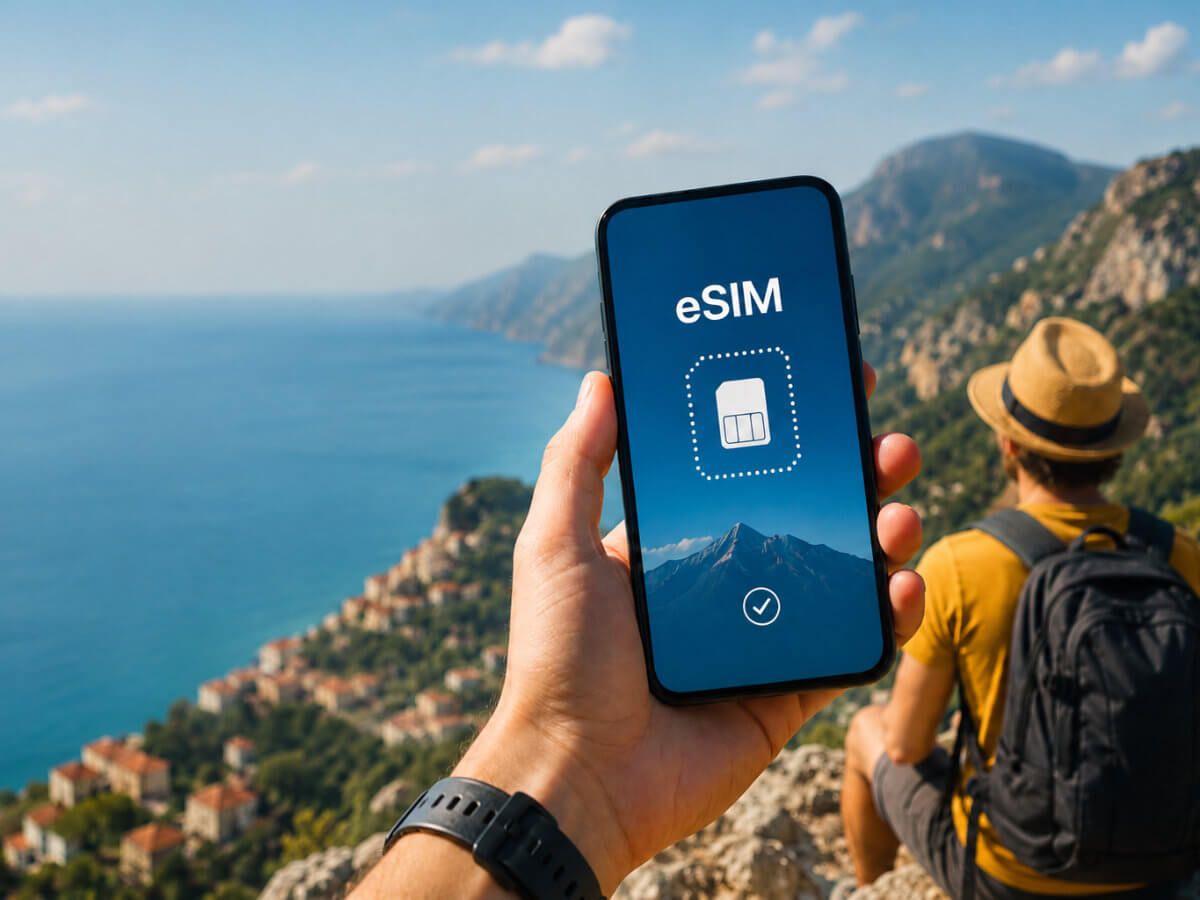
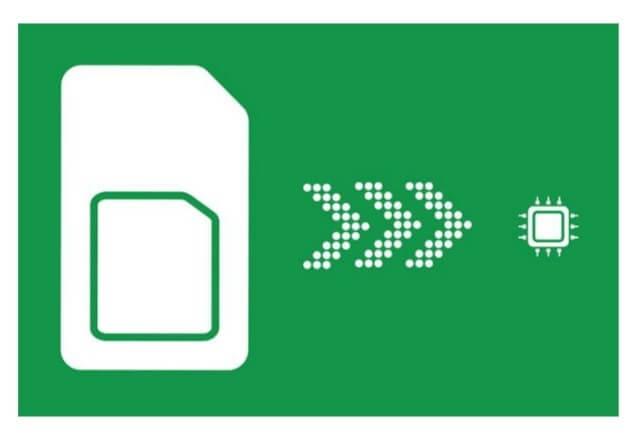
A prepaid eSIM typically requires no physical card and can be activated within minutes by scanning a QR code or downloading a carrier profile. This technology stores your cellular plan directly on the device’s embedded chip, allowing you to switch between carriers without swapping hardware. The key advantage is that you can purchase a data plan before traveling and have service ready immediately upon arrival, eliminating the need to find a local store. This eliminates the need for physical SIM cards entirely, enabling seamless connectivity across multiple networks on a single device.
Why Travelers Are Ditching Plastic SIMs
Travelers are ditching plastic SIMs because prepaid eSIMs eliminate the physical hunt for local SIM cards upon arrival. You avoid fumbling with tiny trays, risking loss of your primary SIM, or dealing with unfamiliar store clerks. Seamless connectivity is activated instantly by scanning a QR code before your flight, granting local data rates upon landing without swapping cards. A prepaid eSIM allows you to keep your home number active for calls and messages, which a plastic SIM often forces you to sacrifice.
This means hopping between countries during a single trip is effortless—you simply download another plan without carrying a pocketful of fragile plastic.
No more worrying about storing the original SIM safely.

The Rise of Digital Roaming: From Physical Cards to Embedded Chips
The shift from physical SIMs to prepaid eSIM roaming fundamentally changes how travelers connect abroad. Instead of hunting for a local retailer to buy a plastic card, users now scan a QR code or download a profile directly onto their phone. This embedded chip is activated instantly, allowing connection to a local network as soon as you land. Activation follows a clear sequence:
- Purchase a prepaid eSIM data plan online before departure.
- Receive a digital activation code via email or app.
- Install the eSIM profile into your device’s embedded chip.
- Enable the profile upon arrival to begin roaming without swapping physical SIMs.
The elimination of physical card handling reduces the risk of losing or damaging the SIM during transit.
Key Benefits: Instant Activation and No Physical Inventory
With a prepaid eSIM, you skip the hunt for physical SIM cards entirely. The instant activation and no physical inventory setup means you buy a plan online, and your connection fires up within minutes—no waiting for a store to open or a package to arrive. This eliminates needing to swap tiny chips or worry about losing them. Esim activation works through a simple QR scan or app download, letting you jump onto a local network right after booking your flight. Here’s the typical flow:
- Choose a prepaid eSIM plan from a provider.
- Receive your activation details via email or app.
- Scan the QR code or install the profile.
- Connect instantly—no physical chip required.
How Embedded Profiles Simplify Global Connectivity
Embedded profiles in a prepaid eSIM eliminate the physical swap of SIM cards, allowing you to activate a local data plan in seconds before you even land. This means global connectivity is simplified because your phone holds multiple profiles, letting you switch between carriers in different countries without hunting for a plastic card. A single scan of a QR code installs a prepaid eSIM profile, making international travel seamless. This digital approach turns your device into a universal gateway, where choosing a local data plan is as easy as selecting a Wi-Fi network. The result is instant access to affordable data anywhere, with no need to visit a shop or manage physical cards.
Scan, Activate, and Save: The Three-Step Setup Process
Forget physical SIMs. The entire setup is a rapid three-step flow: scan, activate, and save. First, you scan a QR code or tap a link, instantly loading the prepaid eSIM profile onto your device. Next, you activate the plan upon arrival, which ties it to a local network without needing a physical card. The final step is saving the profile to your device’s eSIM wallet for effortless reuse on future trips. The sequence is clear:
- Scan the provided QR code to install the profile
- Activate the data plan when you land
- Save the embedded profile to your wallet for later
Bypassing Airport Kiosks and Exorbitant Roaming Fees
Travelers bypass airport kiosks and exorbitant roaming fees by installing a prepaid eSIM before departure. Instead of queuing for overpriced physical SIM cards or paying your carrier’s daily roaming rates, you activate a local data plan instantly upon landing. This eliminates the surprise charges from international roaming and saves the time wasted in airport shops. You skip the physical transaction entirely, keeping your connectivity immediate and cost-predictable. By choosing prepaid eSIM, you avoid carrier roaming penalties entirely.
How does a prepaid eSIM bypass airport kiosk fees? It lets you purchase and activate a local data plan online before you fly, meaning you never step foot in a kiosk or incur a single dollar of carrier roaming overcharge.
Choosing the Right Plan for Your Data Needs
Choosing the right prepaid eSIM plan hinges on accurately forecasting your data consumption. For light users who primarily check emails and maps, a 1GB or 3GB plan is sufficient. However, if you stream video or use navigation apps heavily, opt for an unlimited data package to avoid costly top-ups. Always verify the plan’s data speed cap after exceeding your high-speed allowance, as throttled connections can render video streaming impossible. Prioritize plans with multi-country coverage if you travel across borders, ensuring seamless connectivity without switching providers. Match your plan’s duration to your trip length to prevent waste, and confirm compatibility with your device’s eSIM capabilities before purchase.
Regional vs. Global Packages: What Actually Fits Your Itinerary
When selecting a prepaid eSIM, your itinerary dictates whether a regional or global package fits best. A regional plan covers a specific cluster (e.g., Europe or Asia), delivering lower costs per gigabyte if you stay within that zone. Global packages aggregate multiple regions but often include higher per-GB pricing and throttled speeds in less optimized areas. If your trip is confined to one continent, regional data trumps global flexibility. Conversely, a global plan justifies its premium for multi-region hops—such as transiting from Japan to Brazil—where buying separate regional eSIMs would be inefficient.
| Coverage Scope | Regional Package | Global Package |
|---|---|---|
| Best for | Single-country or single-region trips | Multi-continent itineraries |
| Cost per GB | Typically lower | Usually higher |
| Speed consistency | Optimized within region | Varies by local partner networks |
Comparing Top-Up Flexibility and Validity Periods
When comparing prepaid eSIM plans, top-up flexibility and validity periods directly impact your budget and usage control. Plans with shorter validity (e.g., 7–30 days) offer lower upfront cost, but demand frequent recharges, increasing administrative hassle. Conversely, longer validity periods (90–365 days) provide stability, yet require a larger single payment. For optimal value, assess your travel frequency:
- Estimate your typical data volume per trip.
- Match the validity period to your travel schedule—shorter for sporadic trips, longer for regular use.
- Choose plans allowing partial top-ups without resetting the validity clock, preserving unused data.
This strategic comparison ensures you never waste credit or pay for idle days.
Compatibility Checklist: Phones and Carriers That Work
You pull into a new city, phone in hand, ready to activate a prepaid eSIM for local data. But the plan won’t install. The real story here is your Compatibility Checklist: Phones and Carriers That Work. First, your phone must be carrier-unlocked—not just unlocked in theory, but confirmed by checking its IMEI against the eSIM provider’s list. I once watched a friend fail because his US-bought Pixel 7 lacked the specific firmware for a Swiss prepaid eSIM’s network bands. Next, the carrier must explicitly support prepaid eSIM activation for that device model; many budget carriers only whitelist recent iPhones. Without this Compatibility Checklist, your prepaid eSIM remains a dead code, not a connection.
Device Lock Status and Carrier Restrictions
Before activating a prepaid eSIM, verify your device’s lock status. A carrier-locked phone will only accept eSIM profiles from its original network, blocking most prepaid eSIMs from other providers. Device lock status and carrier restrictions directly determine eSIM compatibility; an unlocked device is required for global prepaid eSIM use. For instance, a U.S. carrier-locked iPhone cannot install a prepaid eSIM from a European provider until unlocked. Q: Can a prepaid eSIM work on a carrier-restricted phone? A: No—the phone must be fully unlocked by the original carrier to accept third-party prepaid eSIM profiles.
How to Confirm Your Smartphone Supports eSIM Profiles
To confirm your smartphone supports eSIM for a prepaid plan, first navigate to **Settings > Cellular or Mobile Data**; if you see an option to “Add Cellular Plan,” your device is likely compatible. Alternatively, dial *#06#—a visible EID number confirms eSIM capability. For assured accuracy, reference your phone’s official specs at the manufacturer’s Singapore eSIM site under “SIM card type.”
- Check Settings for an “Add eSIM” or “Add Data Plan” button.
- Dial *#06# to see if an EID appears alongside IMEI numbers.
- Visit your device model’s official support page for confirmed eSIM compatibility.
Top Use Cases Beyond Vacation Travel
For the digital nomad, a prepaid eSIM isn’t for vacation—it’s for separating work connectivity from home. I remember tethering my laptop to a local eSIM in a Lisbon co-work, keeping my personal number on airplane mode to avoid roaming fees.
The real shift is using eSIMs as a backup lifeline for business trips; when your primary carrier drops signal in a Seoul subway, a prepaid data-only eSIM keeps your Slack alive without hunting for Wi-Fi.
Another unspoken use: short-term relocation for family events, like a two-month stay in Mexico to care for a parent, where a single eSIM profile manages local data while your home number stays on the physical card for bank alerts. No contracts, no physical SIM swaps—just purpose-specific connectivity.
Digital Nomads and Long-Term Remote Workers
For digital nomads and long-term remote workers, a prepaid eSIM eliminates the need to hunt for local SIM cards upon arrival in each new country. They can purchase and activate a data plan before departing, ensuring immediate connectivity. Unlike short-term tourists, these users benefit from long-duration plans spanning 30, 60, or 90 days, often with high data caps suitable for video calls and cloud work. Maintaining the same eSIM profile while switching between countries can simplify expense tracking for freelancers. The key advantage is avoiding contract lock-ins, allowing workers to seamlessly extend or change their plan based on their itinerary without visiting a physical store.
- Select a global or regional prepaid eSIM plan with a validity matching your stay.
- Install the eSIM profile before departing your current location to remain reachable immediately upon landing.
- Top up data or switch to a new plan for your next destination without changing your phone number.
This workflow supports a location-independent connectivity strategy, ensuring reliable internet access for work across multiple border crossings.

Secondary Lines for Business or Privacy
A secondary eSIM line serves as a dedicated business or privacy number without requiring a second physical device. For business, it allows professionals to separate work calls and messages from personal contacts, routing them through a single handset with a clear demarcation. For privacy, a prepaid eSIM can be activated for temporary project communication, then deactivated, leaving no lingering data trail on a primary carrier account. This setup provides a disposable or long-term boundary, offering two distinct digital identities from one phone. The core advantage is enhanced communication segregation, enabling users to manage professional obligations or protect personal information through a simple eSIM profile switch.
Pricing Structures and Hidden Costs to Watch For
Prepaid eSIM pricing structures often appear simple but hide costs in top-up validity, data throttling, and activation fees. Advertised “unlimited” plans may cap high-speed data at a low threshold (e.g., 5GB), then throttle to unusable 128kbps. Always check if your plan automatically renews at full price after the initial period—a common hidden charge. Vendors may also levy invisible fees for number porting or multi-device sharing. Q: How can I avoid unexpected top-up costs? A: Choose a plan where your credit never expires or only deducts upon use, and verify that all taxes and activation fees are included in the upfront price, not added later.
Per-Gigabyte Rates Versus Unlimited Data Caps
When choosing a prepaid eSIM, you’ll typically decide between pay-as-you-go data bundles and unlimited plans. Per-gigabyte rates are great for light use, where you buy exactly what you need and avoid waste. But watch out: these rates can skyrocket if you go over your bundle, often costing more per GB than a small unlimited cap. Unlimited data caps, however, often throttle speeds after a set limit (like 10GB at full speed). This means “unlimited” can be slower than a high-gigabyte plan for heavy streaming. For travelers, picking the right option depends on your daily data habit.
| Feature | Per-Gigabyte Rates | Unlimited Data Caps |
|---|---|---|
| Cost control | Know exact cost upfront | Risk of throttled speed after cap |
| Best for | Light users, short trips | Heavy streaming, long stays |
| Hidden cost | High overage fees per GB | Slow “unlimited” speeds |
Activation Fees, Top-Up Discounts, and Auto-Renewal Traps
Prepaid eSIM pricing often hides three pitfalls. Activation fees, though sometimes waived, can add $2–$10 to your first purchase, so always check the checkout total. Top-up discounts are common, but they frequently lock you into larger data bundles than needed, costing more upfront. The biggest trap is auto-renewal: many providers set this as default, with automatic charges at full price and no reminder. This can drain your balance or trigger unwanted plans.
Q: How can I avoid activation fees and auto-renewal traps on prepaid eSIM?
A: Choose providers that list activation fees separately; for top-ups, compare per-GB cost against smaller bundles. Always disable auto-renewal in your account settings immediately after purchase, or use a prepaid-only account.

Overcoming Common Setup Hiccups
Activating a prepaid eSIM often stumbles on three common hiccups: a flaky internet connection, an unsupported device, or a misread QR code. First, always install the eSIM over a strong Wi-Fi network, as cellular data can stall the download. If the QR code fails, manually enter the SM-DP+ address given in your confirmation email instead. Another frequent snag is a locked phone; ensure your device is carrier-unlocked before purchasing. Stuck on “No Service”? A quick question: Q: Why won’t my eSIM activate after scanning the code? A: Your phone likely needs a quick restart or a forced profile refresh in Cellular Settings under “Add Cellular Plan.” Finally, verify your prepaid plan’s start date—some don’t activate until a specific time zone trigger, not at the instant of payment.
Troubleshooting Network Registration Errors
When your prepaid eSIM fails to register, start by toggling Airplane Mode for 30 seconds—this forces a fresh network handshake. Ensure APN settings for your prepaid eSIM are correctly inputted, as a mismatch blocks registration. If persistent, manually select your carrier under Network Settings instead of “Automatic.” Q: Why does my eSIM say “No Service” after installing? A: The network profile may need a reboot; power off your device for one minute, then check if the registration updates. If still stuck, re-scan the QR code or re-download the eSIM profile from your provider’s portal—corrupted data during initial download is a common culprit.
What to Do When a Profile Fails to Download
When a prepaid eSIM profile fails to download, first restart your device to clear temporary glitches. Next, ensure you have a stable Wi-Fi connection, as cellular data may be inactive. Double-check your scanning method: use the QR code or manual entry exactly as provided. A failed download often stems from entering an incorrect activation code or scanning a blurred QR. If the issue persists, delete the pending profile from your device settings and request a new eSIM from your provider’s app or email. Follow this sequence:
- Restart the phone
- Connect to Wi-Fi
- Rescan the QR code carefully
- Contact customer support for a fresh profile
Comparing the Major Digital Roaming Providers
When comparing major digital roaming providers for a prepaid eSIM, your choice often comes down to price versus flexibility. I tried Airalo for a week in Thailand—$9 for 3GB—and it activated instantly, but I had to buy a new eSIM once the data ran out. Then I switched to Holafly for its unlimited plan at $19, though I noticed throttled speeds after 5GB. A friend insisted on Nomad for its top-up option, letting her add 1GB mid-trip without repurchasing. Which provider is best for a short trip? For a city break under five days, Airalo’s fixed plans are cheaper; for longer stays, Holafly’s unlimited data avoids mid-trip panic. Each lacks a kill switch for unused data, so calculate your daily usage first.
Airalo, Holafly, and Ubigi: Strengths and Weaknesses
Airalo excels in breadth of regional prepaid eSIM plans, offering cheap, data-only options for travelers—though its biggest weakness is zero voice minutes on most packs. Holafly counters with unlimited data, a major perk for streamers, but suffers from throttling after high usage and frequently higher prices. Ubigi stands out for stable, fast connections in Japan and Europe, yet its limited country coverage and fewer regional bundles weaken its appeal. For a clear hierarchy:
- Budget travelers should pick Airalo for sheer low-cost coverage.
- Heavy data users lean toward Holafly despite potential speed caps.
- Reliability seekers choose Ubigi for performance, accepting narrower options.
User Reviews and Real-World Speed Benchmarks
When comparing prepaid eSIM providers, user reviews and real-world speed benchmarks often diverge from advertised “4G/LTE” promises. Frequent traveler feedback on Reddit and Trustpilot consistently flags Airalo for throttled speeds after a data threshold, while Holafly users cite stable connectivity but higher latency in congested zones. Third-party tests show Nomad eSIM achieving 85% of local carrier speeds in urban Japan, whereas Ubigi lags 20-30% behind in rural European tests. A cross-provider analysis of 500+ user reports reveals that speed consistency—not peak Mbps—is the primary complaint. For practical trip planning, prioritize eSIMs with verified user speed logs for your specific destination.
| Provider | User Sentiment (Common Theme) | Real-World Speed (vs. Local SIM) |
|---|---|---|
| Airalo | Throttling after 1–2 GB (consistent complaint) | 40–60% of local speed on heavy data |
| Holafly | Stable but higher latency | 70–80% in dense urban zones |
| Nomad | Accurate speed claims in reviews | 85% in tested cities (Tokyo, London) |
| Ubigi | Rural connectivity gaps | 60–75% in non-metro areas |
Future Trends in Embedded SIM Technology
Future embedded SIM technology will enable prepaid eSIM profiles to be dynamically swapped between devices without physical transfer, allowing users to instantly reallocate a single prepaid data bundle across a smartphone, tablet, and laptop. These eSIMs will support ephemeral, zero-touch provisioning, letting travelers activate a prepaid plan directly from a device’s settings with no app download. Enhanced secure elements will allow granular daily data top-ups tied to usage patterns, not fixed buckets. For privacy, future eSIMs will support temporary prepaid aliases, automatically deactivating after a set period. Expect user-controlled profile prioritization, where an unused prepaid eSIM automatically defers to a cheaper active one, optimizing cost without manual switching.
Exploring eUICC and Multi-Profile Management
Exploring eUICC and Multi-Profile Management reveals a shift where a single chip hosts multiple prepaid eSIM profiles. Users can dynamically switch carrier profiles without swapping physical cards, enabling instant activation of local data plans while abroad. A practical application involves keeping a home profile active for calls while toggling a prepaid data-only profile for high-speed roaming. The device’s eUICC securely downloads and stores these profiles, allowing users to delete or suspend inactive ones directly from settings. This eliminates the need for multiple SIM trays or QR code re-scans, streamlining prepaid service management.
| Profile Type | Management Action |
|---|---|
| Primary Home | Always active, minimal data |
| Prepaid Roaming | Switched on for data, then suspended |
| Testing/Temporary | Deleted after use to free storage |
How 5G Standalone Networks Are Changing the Game
5G Standalone (SA) networks eliminate reliance on 4G infrastructure, allowing prepaid eSIM users to experience true ultra-low latency connectivity. This enables instantaneous plan activation and real-time network switching without downtime. For travelers, SA’s native network slicing dedicates a virtual, high-speed channel directly to the eSIM, bypassing congested public lanes. This means buffer-free video calls and responsive cloud gaming on prepaid data, even in crowded stadiums. The shift also reduces power drain on devices, extending battery life during roaming. Prepaid users gain a previously impossible agility, with the eSIM dynamically negotiating network slices for specific tasks like streaming or navigation.